Writing on the Wall #2: The best of ideas happens in the slowest of afternoons

Date and Time: May 25, 2026 8:50 PM
Currently Listening to: Ai Đưa Em Về by TIA (No, this is not a low-cortisol post, despite it being used in low-cortisol TikTok videos)


This post comes after me grading a few papers starting around 7:00 PM. Today was not a very full day: we had a class activity in the morning (just before lunch time), then went back home to attempt to grade papers. The heat and humidity of the day, however, really triggered a migraine which forced me down for at least three hours.

This week is finals week at the university. This is the time when students submit their final output and we, the professors, go knee-deep in grading them. In Philippine academia parlance, we jokingly call this the check republic, for while some people (including fellow academics) actually go to Prague either for vacation or for some academic engagement, the whole lot of us get stuck in our office desks or in our offices at the university housing to finish grading at least 10 papers a day, if we want to make it just before the deadline of grade submissions.

At the very same time, today counts 6 days remaining before the deadline of an academic conference I wanted to attend to in October. From the day the call for papers went out, I already had an idea in mind: watch a film, critique it, and submit the abstract as early as I can. But then, as a teacher of 150 students this semester, alongside being program coordinator, life had other plans. The days toward the deadline (May 31) drew nearer as teaching, public service, and admin work slowly ate through the time I allotted for research.

And now, we’re here. May 25.

I entered academia five years ago knowing that life here can get so fast-paced, especially as neoliberal logics continue to transform the university from a place of genuine thinking to a factory of students and research papers. But, I have never really thought about it until I started taking on more and more tasks. I do feel that more and more is at stake as I attempt to balance all these parts of me as an academic (not to mention me almost completely neglecting my personal side, which is somehow left in Manila). Yet, as an academic, research is an equally important part of our academic lives. But somehow, the time I actually spend reading PDF’s and/or building abstracts for a conference (which may eventually lead to a paper) seem to be less and less. Part of it might be poor planning (yeah, I can admit that to a certain extent), but somehow it is so hard to plan ahead when your every day is fighting fires, helping in planning, in addition to the usual weight of tasks one receives in the domain of teaching. I do realize, though, that when I really lock in and focus on reading and writing, I do accomplish my research tasks — but at the cost, to a certain extent, of my other duties. Is there really no way to find balance in it all? I am aware that part of it is time management and really deliberately giving time to sit down and write. I do feel sometimes that I suck at it. But when one is constantly tired, and can feel the weight of the world every day, is asking for a little more rest not part of productive time management? Since when rest became a sign of laziness?

My thesis adviser once told me to take things slow when overwhelmed. Another article I read said that most of the time, the best ideas come to you in the slowest of afternoons; you only have to let go, smell the flowers, and a spark of creativity hits you sometimes. While the spark of creativity is no certainty at all, I am fairly certain that I have never had a slow afternoon in a very, very long time. And maybe, I should no longer wonder why nothing absolutely brilliant sparks in my neurons when my main motivator is the deadline and not my genuine desire to learn. That skill issue could very well be my fault, but me producing a thesis during my study leave says otherwise.


I decided to start a series in this blog called “Writing on the Wall.” This series is mostly for two things: to revive this blog, as well as to keep me writing something even outside of my narrow research interests. I have been deep into teaching and admin work lately, which means I have been neglecting some of my research functions and research slowly becomes yet another chore. So, I thought a series of posts every few nights will keep my passion for writing alive and eventually translate to getting back to writing papers. More importantly, however, I hope this series allows me (and you, dear reader) to see beyond the narrow grind of everyday life and have a space to sit down, reflect, and philosophize on the things happening around us; with this series of posts, I hope that you (and I) get some breathing room to zoom out and see the bigger picture.

The phrase “writing on the wall” is mostly known from the Bible, but I associate it more with Jose Rizal’s El filibusterismo, which, while meaning the same thing as the phrase in the Book of Daniel, carries a very militant, if not revolutionary, undertone in the Philippine setting. The sinister warning goes: Your days are numbered (Mene); You have been weighed and found wanting (Thecel); and that your kingdoms shall be divided (Phares).

Writing on the Wall #1: the Sisyphean academics?

Date and Time: May 18, 2026, 11:38 PM

Currently listening to: Calling You by Blue October


I had a short conversation with a colleague regarding current state of affairs in the Philippines, particularly the recent alleged “encounters” between the military and activists in Negros Island alongside many other such alleged “encounters” all over the country. Some encounters were indeed between the military and the New People’s Army–those things, the Communist Party of the Philippines would readily claim. But the hundreds of unarmed defenders and activists who choose to forego the comforts of life to fully understand communities whom we barely even talk about until they are featured in the news, were they combatants, too? Oh, to be willing to sacrifice one’s life for one’s love of the people who may or may not ever know their name is perhaps the highest form of love.

It is not the first time we are hearing of these things, however; violence in the countryside is very, very common, but somehow people in the cities never hear of these things, but to thousands of farmers, fisherfolk, and indigenous peoples in the countryside, this is everyday life. Lefebvre was right when he pointed academics from looking at the biggest scheme of things to the smallest of everyday practices, because as the constant militarization and harassment of farmers in Negros demonstrate, the reproduction of capitalism happens in the interstices of everyday life. Yet, somehow, the narrative that spreads in some media outlets and–by a very wide margin–social media easily dismisses dead activists as disobedient children, ungrateful farmers, or even the outrageous term “corned beef.” Social media users can so easily dismiss the seriousness of this violence because the information is mediated; it either hides the intensity of violence in Negros island and many other countryside areas in the Philippines; or, when news breaks out, the state and its agents are so quick to dismiss the dead as “legitimate targets” without opening any formal and transparent investigation and hope that the public takes them for their word. Most of the time, sadly, they do, further obscuring the reality of thousands of farmers in the country.

It can also be very easy to simply dismiss the farmer’s militancy and say, from the comforts of the couch, through a Facebook comment that the poor are free to express their grievances, but they should work within the system instead of militantly asserting their rights. Obviously, these social media commenters do not know anything about life in the countryside and how every legal remedy has brought them deeper in debt or right in front of a gun, ready to wipe dissent off at any moment. The alienation between the cities and the countryside are so alarming that most do not even know why many fertile farmlands are hotbeds of both rebel activity and militarization. One can surmise that, as an educator, this is something we need to expose–and we do–but for thousands of academics in this country, work simply disallows deep contemplation of any sort.

So, let me tell you about my day. this conversation came at the start of a very busy week; we were all knee-deep in administrative work, committee work, checking of examinations, or one or two or even three combinations of all of the above. And all of this is happening around the end of this semester, when papers and final requirements start rolling in! I, for one, am working on administrative tasks for the next semester (which I do not like at all); my colleagues were either checking papers or working on committee tasks for an upcoming event. It is ironic that we talk about one depressing thing to temporarily take our minds off yet another depressing week.

It should therefore not come as a surprise whenever we say “ayaw ko na!” or “pagod na ako!” every 30 minutes or so in the faculty room. The weight of admin work, on top of the weight of all that’s happening around us, makes it so easy to just give up and turn inwards to ourselves and give no care about the world. “Kapoy na ko,” one would say in Hiligaynon. Nakakapagod naman talaga, hindi ba? At around this time of night it really did make me question what we are doing this all for. No, I am not referring to the general role of the teacher in society–I am most certainly referring to the grind that comes with being the teacher. Why am I working 12 hours a day in a seemingly endless grind, only to do it again tomorrow, next week, next semester? What is the point of all this?


The weight of the world, alongside the weight of academic bureaucracy, feels so heavy in one’s shoulders. Professors are relatively well paid, but they are also relatively overworked. Weekend work is the norm here. Budgets cuts force you to do work outside of your expertise and training. At some point every day, I start questioning myself: what am I doing this for? Is all this toil worth it?

“One must imagine Sisyphus happy,” Albert Camus tells us in The Myth of Sisyphus, when the proletarian of the gods himself recognized the meaninglessness of his toiling and, in so doing, struggled (“revolted”) to find meaning in his life by living it to the fullest. I do not necessarily agree with Camus’s worldview; however, his treatment of Sisyphus seems to me the perfect metaphor for describing what one should do when faced with the despair of meaninglessness the toil in academia. “Which part of this job gives your otherwise endless toil meaning?” one should ask oneself. The answers can (and should) vary, but I firmly believe that the academia is not self-serving; its existence inherently finds meaning in helping uplift the society around it. The absurdity of the mechanical, repetitive work that teachers do must be reinvigorated–inspired, I must say–by the idea that we are not only doing this for ourselves, but to at least contribute to a future when no one is exploited, no one is displaced, and no one is killed for fighting for those ideals. We don’t know when–or if–that will happen, but for us still far from freedom, perhaps the struggle to inch towards the emancipation of the working class from exploitation and want gives our measly existence some meaning.

I believe this is the kind of meaning that activists, environmental and human rights defenders, and even those who decide to take up arms have finally found and committed themselves to doing, despite the fact that many of us know that we will not see the revolution won in our lifetime. This love for the people, above everything else, animates the work and sacrifices that thousands of Filipinos give for even the hope of the betterment of this country. Such as a sacrifice is so great that I do not feel like I can be compared, by any measure, to these martyrs. Perhaps, instead of pumping us with propaganda about “brainwashing,” maybe the state ought to ask itself why the brightest minds in academia choose to resist; why the youth find the current society’s “democratic” spaces insufficient to effect genuine change, and why they find hope for the people outside of itself.


We ended our conversation with saying: “fight on, laban, padayon, because if we’re not doing this for the people, then what the f*ck are we doing here?”


I decided to start a series in this blog called “Writing on the Wall.” This series is mostly for two things: to revive this blog, as well as to keep me writing something even outside of my narrow research interests. I have been deep into teaching and admin work lately, which means I have been neglecting some of my research functions and research slowly becomes yet another chore. So, I thought a series of posts every few nights will keep my passion for writing alive and eventually translate to getting back to writing papers. More importantly, however, I hope this series allows me (and you, dear reader) to see beyond the narrow grind of everyday life and have a space to sit down, reflect, and philosophize on the things happening around us; with this series of posts, I hope that you (and I) get some breathing room to zoom out and see the bigger picture.

The phrase “writing on the wall” is mostly known from the Bible, but I associate it more with Jose Rizal’s El filibusterismo, which, while meaning the same thing as the phrase in the Book of Daniel, carries a very militant, if not revolutionary, undertone in the Philippine setting. The sinister warning goes: Your days are numbered (Mene); You have been weighed and found wanting (Thecel); and that your kingdoms shall be divided (Phares).

Ang ating mga bakas sa Kalye España

Minsan, nami-miss ko rin ang Maynila.

Sa gitna ng kaguluhan, karumihan, at trapik ng Maynila, minsa’y hinahanap-hanap ko rin ang gulo ng kalungsurang kinalakhan ko. Nakaka-miss din palang makarinig ng walang humpay na pagdaan ng mga sasakyan at maipit sa libu-libong taong nais lamang magsiuwi at ngayo’y nakahimpil sa EDSA.

Wala naman ako sa ibang bansa–nasa kabilang isla lang ako, nagtatrabaho dahil sa oportunidad na mayroon ako dito. Pero sa bawat balita tungkol sa ating lungsod, nakakaramadam ako na para bang iniiwan ako ng panahon dito sa kabilang dako. Ilang buwan pa lamang akong wala sa Maynila, pero hindi ko na mabilang ang sobrang daming nagsulputang kainan sa Tomas Morato, o mga bagong instagrammable na lugar sa BGC. Hindi ko na rin maalala kung ano ang masasarap na kainan sa Poblacion ng Makati kung hindi ko pa titingnan ang archives ng Instagram stories ko. Ano na ba ang hitsura ng Rada ngayon?

Masaya naman ako kung nasaan ako ngayon, pero hindi ko maiwasang isipin kung sadya ba akong iniiwan ng kalungsurang minahal ko at patuloy kong minamahal. Sobrang bilis pala ng halos siyam na buwang pagkawala. Pero siguro, sobrang bilis lang din magbago ng Maynila.

Kaya sa tuwing nakakaramdam ako ng pagkaiwan–sa tuwing nararamdaman kong napag-iiwanan na ng panahon ang bersyong Manileño ng aking sarili–patuloy kong inaalala at binabalikan ang mga lugar natin. Patuloy kong pinanghahawakan ang mga lugar na minarkahan na ng ating pagsasama. Dahil habang nananatili akong malayo sa ating lungsod, pinapaalala ng mga lugar na ito na paulit-ulit akong uuwi sa piling mo at sa ating lungsod. Kung tutuusin, gusto kong angkinin ang lahat ng lugar na ito kahit sa isip at diwa lang natin.

Sabik na sabik na akong umuwi sa ating lungsod kung saan kita makikita. Sabik na akong lakaran muli ang mga kainan sa Maginhawa kasama ka. Pwede ba namang hindi tayo kumain sa Puff and Dough at sa Shao Kao tuwing nariyan ako? Nais kong bumalik sa kalawakan ng Diliman upang magpahinga kasama ka.

Inangkin ko na rin ang Poblacion para sa atin. Hinding hindi maikakaila ng lugar na iyon ang bawat gabing hindi tayo malasing-lasing, pero nang dahil dito’y mas nakilala pa kita. Sa bawat maingay na bar hanggang sa katahimikan ng ilang bahagi ng Kalayaan sa gabi, ikaw ang aking kasama hanggang sa pansamantala kong paglisan sa susunod na araw.

Atin ang lungsod ng Maynila na iyong kinalakhan. Ang bawat lumang bahay sa Sampaloc, tindahan ng shawarma at biryani sa Mabini, at mga ilaw at plaza ng Malate ay saksi sa ating pag-aangkin.

Higit sa lahat, iginuhit na ng ating mga paa ang mga lugar na ating inaangkin sa kahabaan ng Kalye España. Sa bawat hakbang papunta at pabalik sa 7-11, Mang Inasal, o sa Trabajo Market, unti-unti nang tinanggap ng bawat kalye at eskinita na atin ang mga lugar na ito. Hindi ito maikakali kahit ng hinuhukay na manhole sa bandang de la Fuente. Also, sana naman naayos na nila yun kasi napakatagal na eh.

Sabi ng iba, hindi raw mapapalitan ang pangalan ng Kalye España. Naniniwala akong tulad niya, hindi rin tayo mapapalitan.

Sabik na akong umuwi sa ating lungsod.

Sometimes you have to risk it all (my graduation essay entry)

I am not what one would call a “risk taker” in the usual sense of the term. I in fact abhor having to take risks when there is a safer way to do something. This is especially true when the decisions I have to make have direct economic consequences, i.e. something that can gravely affect my livelihood. I do like to imagine that it came as a surprise to many when I, a BSc. in Computer Science graduate, chose to enroll in UP Diliman’s Master of Arts in History program. Even today, many find my move illogical, with a recent conversation with someone saying that I “has his [my] own reasons” for choosing to be a history teacher/researcher. I have to admit, they kind of had a point: I would have earned much, much more if I “stayed the course” and climb the corporate ladder as a software engineer than teaching in a state university — indeed, many of my classmates in UP Los Baños have already left the country and are now probably sitting in a pile of cash while eating dinner.

Then again, I would like to think that to those who knew me well, my shift to history and higher education was not a surprise at all. Any coworker who has had the luck (or bad luck) of being stuck with me in the office at midnight for a product deployment would know that all I talk about with them is history, culture, and heritage. They would know that every conversation with me would become a history lesson if allowed to carry on long enough.

The bottom line is, this was a big risk, yet the biggest risk I was ever willing to take. The decision was solidified in 2016, when the dictator’s body was interred at the Libingan ng mga Bayani. Back then, I felt powerless being trapped in the office unable to go out to the streets to protest. So, I decided I would have to participate in this discourse in some way. It was not an instant and immediate decision, but day by day, it grew on me. I have the habit of sitting very strong emotions out until they fade away, but this time it didn’t. My desire to become a history teacher grew day by day.

The gambit

And so, the MA program began. I told no one until I passed my first semester. I had to juggle going to Diliman very early in the morning and then racing back to Mandaluyong to attend my day job. Obviously, that did not work out for an industry known for spending their weekends in the office and staying up all night (when there are very few users) watching logs and monitoring app performance, only to be paid with pizza and soda and a few offset hours. So, I had to make a decision: should grad school revolve around my day job, or should my day job enable me to go to grad school? Of course, a part of me wanted to take the first option–it has less risks of sending me on the street to die. However, that option felt so wrong, and I just had a strong urge to prioritize grad school. After all, how would I end up “participating in the historical discourse” if I do not finish what I started?

Long story short, I switched jobs thrice; got laid off; worked as a contractual; lost a job; before I found my way back to Diliman, where there was a (Non-UP Contractual) job that was somehow very lenient with me being in grad school (obviously). However, I also questioned myself from time to time: did I make the right decision? did I make a mistake? Sometimes, I even honestly believed that I would never finish my MA degree and just end up saying “well, that was fun while it lasted.” The amount of self-doubt I have placed upon myself is just so much. I thought of myself as inferior to my peers and a “gatecrasher” of the discipline since I did not have a BA degree. I have always shot my ideas down before ever bringing it up or, at least, I introspected so hard before opening my mouth for fear of getting ridiculed.

I am very thankful, however, that the environment in grad school was not as scary as I thought. My classmates were very supportive of the ideas I have; their criticism was meant to encourage me and not put me down. My professors were equally supportive and encouraged everyone to share their ideas in class. I am very happy that while my self-confidence still was at an all-time low during this time, my surroundings gave me some space to explore my interests and understand myself and what I really want to write (and teach) about. Still, the crippling fear of failure never left me, especially as I approached the greatest challenge in being in graduate school.

The final countdown: writing my MA thesis

I have placed so much pressure on this last stage of being a grad student. I was an MA candidate by then, which meant that only my thesis was standing in the way of me getting my degree. By this time, I was also already teaching in UP Visayas (which I have talked about in the last post), which meant that while I did have very supportive colleagues when I went on study leave, the pressure was also there for me to deliver and actually finish my degree. I mulled on every possible topic I could think of, since no one told me when I started in the program that I should have written my class requirements in anticipation of the thesis topic I want to write about. Eventually, I ended up with my first love: urban history, and I ultimately wrote about the history of informal housing in Metropolitan Manila.

The task ahead was daunting, something I dwelled on for so long. but eventually got started writing with the help of my adviser, Dr. Jely Galang. There were many moments of self-doubt during this time. I kept questioning myself if I was ever going to finish this work–something I have seen as my first ever serious work. It ultimately took me one and a half year to write my thesis, and despite my newfound confidence in my work, the pressure ramped up when it was time to defend it before the panel. Sleep was so hard to come by the night before my defense, and I remember sweating really bad in Silid Balatik (which was air-conditioned by the way). I kept poring over my presentation and my notes and although I am sure that I know my entire work with my eyes closed, I still kept thinking that I missed something. I tried to keep myself from spiraling during the presentation, because I have placed so much pressure on this singular moment and I have raised the stakes too high.

So, imagine my relief when they told me that I actually passed my defense (with revisions), and that the project itself is promising–something that I can continue to further investigate as a PhD dissertation. I was very thankful, but in my mind, I still could not believe it. In fact, as I am writing this post days before my graduation, I still can’t believe that somehow, all my hard work in the past five years paid off. All of it is still very surreal. I wrote my last line of code three years ago, yet somehow it still feels like that only happened yesterday. Somehow, despite all the sacrifices I had to make to pull this off, I am graduating and with a class already waiting for me in a few weeks back in Iloilo.

The MA History program in UP Diliman of course made me into the fledgling practitioner of the discipline, but it means so much more to me because it made me so much more than that. My desire to teach and do research in the discipline I love–and the love of country from which it all emanates–made me more comfortable in risking some things for the things I love and the ideals I espouse. It made me more open to leaving my comfort zone (and the six-figure salaries it potentially offered) and taking a leap of faith if it means being part of molding the next generation of students into critical thinkers who are not afraid to criticize our current societies and explore and promote more equitable alternatives. Cheesy as it may sound, the graduate program (and subsequently becoming a teacher) made me realize how much more of myself I can give for the things I believe in.

Acknowledgements (Extended)

And thus, we come to this. Three days before my graduation.

Please allow me to thank the people who have been instrumental in this entire journey. This is an extended version of my MA thesis’s acknowledgements section, which I kept short and sweet. This one may get cheesy.

I thank the Department of History, UP Diliman for the opportunity to demonstrate my skills and capabilities in the discipline through my acceptance in their graduate program; in addition, I thank them for the environment that enabled me to freely express my ideas. It truly is a conducive environment, with colleagues, professors, and other scholars enabling critical thought.

I thank Dr. Jely A. Galang, my thesis adviser, for the unwavering support and guidance he has provided me throughout the writing process. His expertise in publications and editing has greatly refined my writing skills and the organization of ideas I presented in my thesis. Moreover, he was (and continues to be) an encouraging figure to me during times of self-doubt and low self-confidence, while still being unafraid to critique my writing. I look up to him as my mentor.

To the oral defense panel: Dr. Maria Luisa de Leon-Bolinao (Chair), Dr. Rowena Quinto-Bailon (critic), and Dr. Daniel Mabazza (Dean’s representative), for their constructive and critical feedback which led to further revisions and general improvement of my work. Dr. Bailon and Dr. Bolinao, in particular, have been my teachers in my graduate coursework as well; they have been very open to new ideas yet unafraid to throw criticism on them. All of them have shown the same tenacity and wit in critiquing my thesis and suggesting ways to do it better. Dr. Bolinao also helped me outside graduate work as well; she helped me form a syllabus on Southeast Asian History when I first taught the course!

To Dr. Ros Costelo, who was also my Kas 1 teacher back in Los Baños. She was my favorite teacher back then! And when it was time to decide whether I should enroll in the MA program, she was the first person I consulted. From the very start, she has been very supportive. We would always talk whenever we see each other in the corridor, and she has always expressed how proud she was seeing my progress through the MA program. I was very happy when she showed up right at the end of my thesis defense and congratulated me for passing the defense.

To the Division of Social Sciences, UP Visayas, who took a chance on me when they hired me as instructor of history. I knew no one in UPV back when I was starting out and they knew nothing about me as well, yet they perhaps found me sufficient and bet on me that I can fulfill the roles of an instructor. Their support also manifested when they granted me one and a half years of study leave to finish my thesis. I am more than happy to return this support by doing my best as a full-time member of its faculty.

To the past and present members of the history cluster of the Division of Social Sciences whom I have had the pleasure of knowing, I thank you for the support and encouragement you have given me during my thesis writing stage. All the conversations I had with all of you led to some extremely great perspectives when writing my thesis. I am particularly thankful to Asst. Prof. Elgin Glenn Salomon since the conversations I had with him ultimately led to the mapping objective of my thesis. I also give special thanks to Mr. Rad Xavier Sumagaysay, who has been a constant especially when he went on study leave and we have had the chance of hanging out together. He has been a constant source of support and also a “testing ground” of ideas and conclusions. His honest critiques could not have come at a better time! Ms. Precious Maecah Ratay also deserves special thanks: we were (almost) doing the thesis stage at the same time, and in a way our mutual encouragement and support of each other is something I cherish and appreciate.

The University Library of UP Diliman, particularly its Filipiniana and microfilm sections, for their reliable help in finding the resources I needed in their collections. They would surely attest that during the writing stage of my thesis, I was an everyday sight to see in the lobby perusing through microfilm copies of old newspapers, iPad and bike helmet in hand. I would begin my day around 9-10 am in the library, have something delivered for lunch, and carry on until 5 in the afternoon, then ride my bike back home. I used to dress up quite well (I would say) during the first weeks of my visits there; that effort lessened as the days went by, and I was basically wearing pambahay by the time I was finishing the research phases! You could say that, in a somewhat literal sense, I lived in that library!

The staff of the library of the School of Urban and Regional Planning (SURP), particularly the head librarian Ma’am Evelyn Laxamana, who ensured that I was getting the resources I needed and that I was comfortable every time I perused their collection. Their rich collection was of course very useful to me, making me a “regular” from their last days in the old building to their move to the newer one right beside it.

To the organizations I have joined, particularly the Congress of Teachers/Educators for Nationalism and Democracy (CONTEND), for allowing me to channel my ideas and energies into organizing and planning activities beyond the classroom, and for strengthening my resolve to always side with the Filipino people in the defense of their rights and livelihood and affirming that the fight against imperialism is indeed a good one. On a more personal note, I am glad that I made friendships and acquaintances in the organization that I know would last.

To Jonah Leigh Ramos, whose love and support got me through the good times and the bad. She was always there to help, even when help meant only listening. Moreover, her academic input to the study was of great help, particularly in clarifying concepts that are common to our research interests. She really is all-in-one: she indeed is a partner both academically or otherwise.

To Jocelyn, my mother, I thank her for all the support and understanding she gave me. She did not contribute academically to my work and the rest of my grad school days, but her unwavering support and encouragement was more than enough for me to carry on. Her understanding on days when I cannot attend family reunions and cannot go home is a testament not only of her love, but also of her trust in my decisions and the sacrifices that needed to be made.

To my classmates in grad school, thank you for the fun conversations that we used to have over lunch. From academic talk to chismis, all are fun memories I will cherish. Sana, maulit muli sa mga conferences and other events! I will be graduating with some of you this weekend, but I hope for the best for all of us, particularly the completion of our degrees.

To friends and family who has in some way been a part of this journey, I thank you from the bottom of my heart.

The Year that Was

It’s already the second of January here in Manila, but I guess it’s never too late to write something about the past year and the year that is to come. I am not one to post something long on Facebook, so I’ll just put it here, and hopefully, people will read it.

I still don’t know how to appraise my 2021. It was both a good year and a tough year. Nonetheless, I learned from experience that you never really forget anything at all; it all just stays in the subconscious and will be brought up to the fore when you least want it to, by the things you least expect to do so–in my case, it’s a place, a song, a sandwich, an electric bill.

Dialectics teaches us that whatever we have experienced will become indelibly part of us whether it disappears into another contradiction. Life is indeed a series of contradictions on contradictions on more contradictions. But what dialectics really wants to tell us is that everything changes; nothing is inherently static. This year, I have learned to accept that–perhaps, for the first time in my entire life.

2021: Annus mirabilis

2021 was the year I reached an incredible career milestone. Since 2017, I have resolved to change careers by working towards a master’s degree in history. That year I took a step forward and worked towards leaving my old corporate career and becoming a history professor. I have had my ups and downs through the years, but 2021 was a breakthrough year for me.

Some friends and applied for a teaching position at the University of the Philippines Visayas (UPV), mostly just for the heck of it. Fortunately, I got accepted and now I have just finished my first semester as an instructor of history at UPV. This semester I taught History 1 and the Life and Works of Jose Rizal–known as PI 100 in UP. I also struggled and perhaps even had cold feet when I first learned that I got the job; I struggled in taking that leap from the corporate world to academia, particularly since not a lot of people do that; it was more common to see people going the other way around.

Doing modules in the garden

In the end, I took the leap, and I had really nice and wonderful students this semester who persevered despite the relentlessly taxing online setup. I had students who did their best to respond and participate in class. After I did my last class, I have received a lot of heartwarming positive comments–which I hope is the same thing they put in their SET evaluations–saying that they learned a lot from me and I made history class sound like gossip time, something I would really like them to feel whenever they come to my class. Teaching history is not about drilling dates and names into the minds of young kids; it’s about getting the past closer to them and making it alive in their imagination. When my students told me exactly that and called me #ProfMarites, I knew I had accomplished part of what I have set out to do.

It is not without its challenges; as of now, I am still dealing with a lot of papers to check, plus the dilemma of having to extend deadlines and when to do so. But indeed–as the cliche goes–it is a noble profession.

I still wonder from time to time if all of this is real; I do wonder more often, however, about where I would be now if I had stayed in my corporate job. I am constantly surrounded by people from my corporate, programmer life making it big elsewhere; most of my batchmates are now in Singapore, or Hong Kong or god knows where that isn’t the Philippines. I wonder what would’ve happened to me if I just doused my burning passion with the fire hydrant of reality and just continued my life as a programmer. But at the end of such mentally exhausting mind exercises, I come out unscathed, having no regrets about taking the path I chose. I would’ve lost my soul and the characteristic joy and enthusiasm I have for life had I continued down that path.

Teaching history is not about drilling dates and names into the minds of young kids; it’s about getting the past closer to them and making it alive in their imagination.

Also, this year, I passed my Spanish language proficiency examination at UP. I started learning Spanish in 2013 when I was an undergraduate in UP Los Baños. Since then, I have learned the language on my own, reading newspaper articles or even striking up conversations with strangers online. Not to toot my own bugle, but I was really confident during the exam since I no longer consider the language strange–to some extent, I have taken it as my own. More than understanding it and thinking with it, however, I have been able to feel with Spanish; I have laughed, cried, gotten angry, gotten excited, and have even discussed Philippine history in that language. I no longer look at Spanish as “their” language, but “mine” as well.

The “I broke my neck” pose lol. Conference mode!

This was also the year I presented at my first conference. I presented at the International Conference of Geographic Studies (ICGS) 2021. To many of us, this is no longer a big deal; but to me, it was. I really held back on submitting my papers from grad school to conferences since I thought I was never good enough to be “in the big leagues” with colleagues since they all graduated with a BA in history while what I had was a BSc in Computer Science. Ever since I entered grad school, I have always felt that I was a gatecrasher of the discipline–that I never really belonged since I was coming from the sciences. This conference changed all that. I felt like I really belonged to the academe. I was an instructor, I presented a paper, I got inducted into the Philippine Geographical Society (for one year)–for once in my life, I felt legit. I do belong here.

2021: Annus horribilis

Photography became my hobby, my refuge.

2021 wasn’t without its bad moments. In fact, the bad moments may even equal or surpass the good ones this year.

Some things may end to make way for better things. I am not really sure if I believe that because the constant, lingering pain of losing people really consciously tells me otherwise.

This year was the year my six-year relationship ended. It is hard to believe just how easy it is to lose the people dearest to you in so much as a fleeting second–that conversely, it is much harder to keep people around than letting them go. It is even harder to imagine how easy it is to lose someone you shared a significant part of your life with for the better part of your adult life. But it was a mutual decision, and I hope we both keep healing, get better, and excel at what we do.

Then came dealing with the pain. I was miserable. I learned how to smoke cigarettes for the first time because the alcohol wasn’t enough. Some days I would finish one pack in two hours and finish another half the next. My fridge was full of beer and a bottle of Jaegermeister. My body was a weird cocktail of cigarettes and alcohol for the first few months. I wasn’t proud of it, but I needed to cope with my pain without bothering anyone on a regular basis.

Some things may end to make way for better things. I am not really sure if I believe that because the constant, lingering pain of losing people really consciously tells me otherwise.

I moved to an apartment where I worried every month if I would make the rent. I lived paycheck to paycheck for the first time, and in times like these, the one constant who would just hug me without saying anything nor asking me to say something was no longer there. I have faced adult life alone for the first time, and it was a hundred times scarier than the past six years combined. Even moving home was a worry; I felt as though there was no longer space there for me.

This year was also the year I stopped functioning in my organizations. I can only say that there were myriad reasons but after a period of being demoralized, I can only wish I can come back strong and serve the people again.

2022: Año para soñar

Still, we hope for the best this coming year. I end my New Year with some unexplainable anxiety, but also with some semblance of peace. I find solace in the fact that this human-invented holiday actually has a placebo effect; we can, indeed, start over. Perhaps this is humanity’s reset button. Photo by Malte Luk on Pexels.com

I look back at that year with such fondness. It was a great year, but also a tough year. The cliche of yearend messages on Facebook is that the year had been a roller coaster, filled with ups and downs; decidedly and validly so. I hate using that cliche but that was exactly how 2021 went for me. It had a high point and a low point, and both of them happened in the second half of the year. The months from July to December had gone so fast I wasn’t able to cope up; it was like putting fires out every week or so, and when I can’t, I just curl up in a corner and break down, cry, or do something else to calm my anxiety attacks.

I wrote this entry to try to make sense of the year that was and to find the right words to appraise it; however, it’s still not there. 2021 was an indescribable year for me. There probably are no words for it–other than the cliche roller coaster ride–because I’ve literally been through hell and heaven in the second half of that year. I have experienced what walking without direction was like; There were times when I didn’t plan my week and the furthest my mind could think of was “what’s for dinner?” I can say with absolute certainty that, for a while there, I knew what “dead inside” meant.

Still, we hope for the best this coming year. I end my New Year with some unexplainable anxiety, but also with some semblance of peace. I find solace in the fact that this human-invented holiday actually has a placebo effect; we can, indeed, start over. Perhaps this is humanity’s reset button.

This year, I am looking forward to moving to Miagao, Iloilo, especially when face-to-face classes start. I will be living outside Luzon for the first time (and riding a plane for the first time!) and will live in a place where I don’t know the language at all.

I am also looking forward to writing my master’s thesis this year. I have already decided on a topic and I am now in the process of writing to potential advisers so that they take me in.

I am also looking at maintaining healthy habits. I am continuing to keep a planner (it has really helped me last year), and I might write more often here, so stay tuned!

Happy New Year, everyone. I hope this year will be our year. I hold the sparklers up for you, as I do for myself as well. We all badly need it.

Ojalá sea nuestro año.

Guarding the Gates of Cinema

A few days ago I was mindlessly scrolling through my Facebook feed, maybe because I’ve been on my longest unemployment streak so far, or perhaps it was simply a case of lazy weekend and I had nothing to do except either immerse myself into some books—on the one hand, I’m reading Edward Said’s Orientalism (good read, by the way. classic-yet-easy to read postcolonial literature for the budding postcolonial); on the other hand, I’m reading José Eustasio Rivera’s La vorágine because for some reason I was invited to a book club—or scroll through social media in a semi-trance state. I have had enough reading of both books during the week, so I chose to go for some mindless scrolling on Facebook.

It would have been a typical, lazy Saturday afternoon — something that would’ve remained the same whether I was employed or not (things would be drastically different if the semester was ongoing and I had graduate classes on weekends), had it not been for this video essay a friend of mine shared on his feed. It was this “video essay” entitled Cinema by Philip Brubaker. It is an entry for the FILMADRID Festival Internacional de Cine.

I am assuming that you watched the video before proceeding, but on the (hopefully) off chance that you did not, I will try my best to summarize and explain it here:

The “video essay” started by quoting famed director Martin Scorsese’s interview with Empire magazine, in which he remarked that Marvel movies are not cinema, and instead compared them to theme parks (a phrase he has since used in subsequent interviews is “amusement park films”). This statement inevitably received some criticism and backlash, particularly and especially from Marvel fans. We will go back to this statement in later, when we further dig deep into Scorsese and his ideas.

The video narrator then declared that modern cinema is toilet paper, since it is, to quote the video, “so common, yet so banal.” He says that in the age of the Internet and streaming services like Netflix, images are merely given away and are readily available to whoever wants it that it loses its value and meaning. Apparently an indictment of the Internet and the streaming services, he says that the Internet has placed all images in an equal footing, blurring the distinction between films/cinema and all the other types of images. To him, modern cinema is toilet paper because it is so common, it is everywhere, yet–particularly referring to the Marvel franchises and franchise films in general–have nothing new, nothing different. What franchise films have, instead, is some level of sameness wherever one looks.

It then says that the abundance, availability, and sameness of these modern films causes one to just merely binge consume content, immediately jumping to the next movie as soon as the first one finishes, without lending a moment or two to think about and reflect on the images they just saw. Just like toilet paper, modern cinema is consumed and immediately thrown away. In the age of streaming and internet, the narrator hopes to find cinema, the art form, alive and well again.

The video made some good points, but it definitely shook me to the core when he compared modern cinema to toilet paper. How can someone make such a comparison? My knee-jerk reaction was to post an update on social media calling out this video and labelling it “elitist,” but as an graduate student deprived of doing research for a month now, I decided to hold my horses and do some further research and much analysis.

“It’s not Cinema, it’s something else:” On Martin Scorsese

Martin Scorsese at the premiere of “Shutter Island,” Berlinale 2010. Source: https://upload.wikimedia.org/wikipedia/commons/3/32/Martin_Scorsese_Berlinale_2010.jpg

Okay, first off: don’t get me wrong. Martin Scorsese is my favorite director of all time. I first came to know his name when I watched his movie The Wolf of Wall Street (2013). I then found out that many of the movies that made their impact on my life, such as The Aviator (2004), Gangs of New York (2002), as well as the classics like Goodfellas (1990) and Taxi Driver (1976) were all part of his long and distinguished filmography. I was converted into a Scorsese fan in an instant. Getting into this analysis of his insights and ideas, therefore, is no easy task.

Around October to November of 2019, Martin Scorsese has always remarked in various interviews and press conferences that Marvel movies are not cinema, since they do not convey the human experience to another human being. He compared them to theme parks, in the sense that they were entertaing but basically lacking in depth. I would like to quote Scorsese, for my summary seems to have not given him justice. When asked about the Marvel Cinematic Universe, he said:

I don’t see them… I tried, you know? But that’s not cinema. Honestly, the closest I can think of them, as well-made as they are, with actors doing the best they can under the circumstances, is theme parks. It isn’t the cinema of human beings trying to convey emotional, psychological experiences to another human being.

Martin Scorsese, Interview with Empire Magazine

It was a comment shared by other directors, such as Francis Ford Coppola, who commented that the Marvel movies were despicable, and that Scorsese’s comment was an understatement. Scorsese would make further remarks within the month to reiterate the same point. In a press conference for The Irishman, he said it again–“it’s not cinema, it’s something else“–and called on filmmakers to defend the movie theaters from “being invaded by it.”

It was seen as a snobbish remark by many people, garnering various reactions not only from fans but also people like James Gunn, director for the Guardians of the Galaxy movies, who framed the comment as a matter of generational taste, as well as Marvel executive Kevin Feige, saying that the appreciation of art and cinema is a subjective matter — “Everybody has a definition of art.

Scorsese then wrote an op-ed for The New York Times explaining the statement he made and further expounding on his point. So I read and analyzed the New York Times piece and compared it to his other interviews and pronouncements, eventually leading me to make a series of conclusions about what Scorsese meant by such a loaded statement (side note: if ever I do have a Spanish-speaking audience, el artículo se puede leer en español).

In this section, I will try my best to explain the two main points I understood from the op-ed, and state my points of agreement and disagreement shortly thereafter. The two points are: the auteur and his freedom, and cinema and human experience.

The Director is the Master: The Auteur Theory

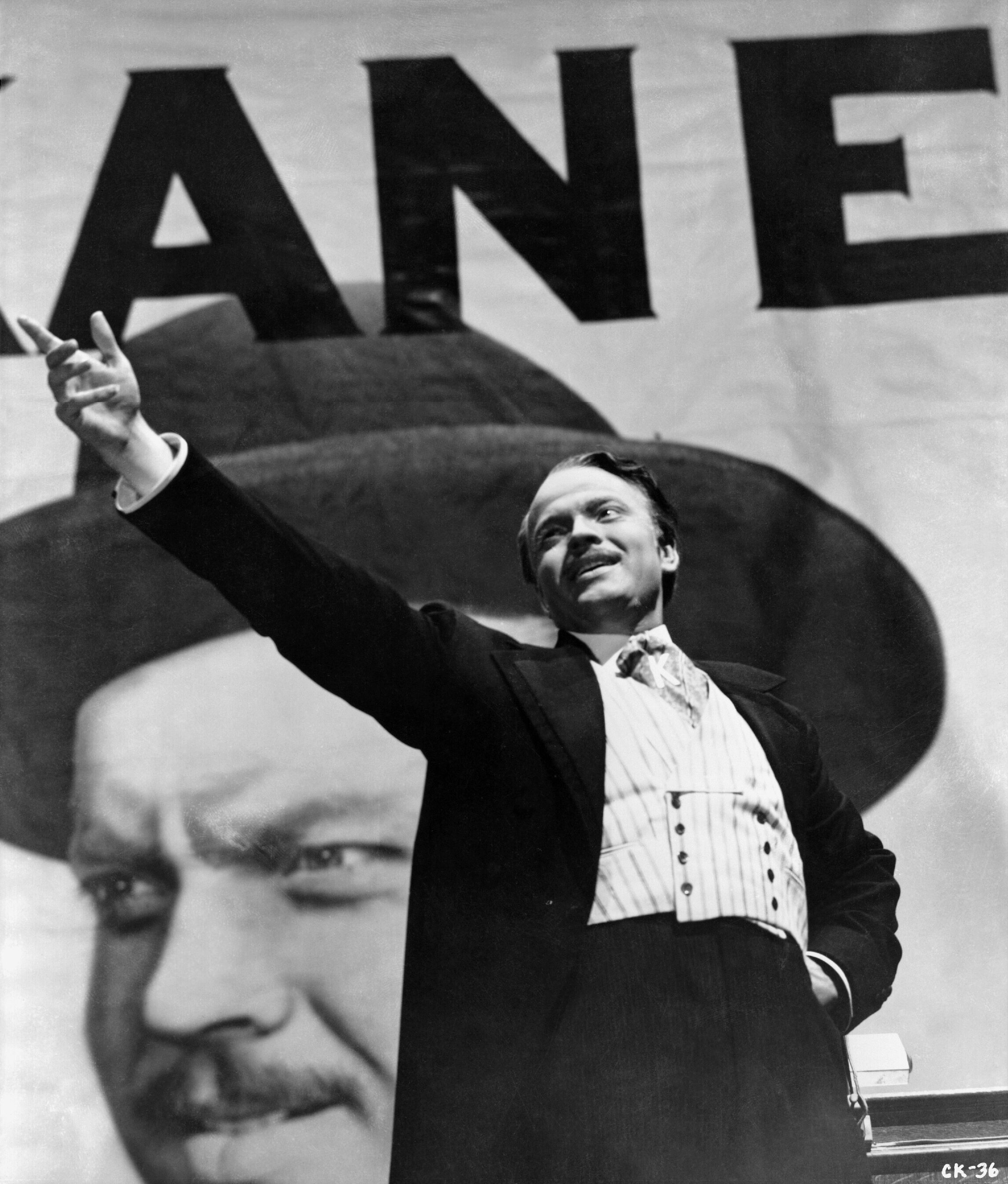
Orson Welles as Charles Foster Kane in Citizen Kane (1941), which he also directed. Orson Welles is considered an auteur filmmaker. Source: https://commons.wikimedia.org/wiki/File:Citizen-Kane-Orson-Welles.jpg

It’s easy to simply dismiss his statement as condescending, conceited, or downright snobbish without digging deep. The pronouncements of Scorsese, Coppola, and other directors before him who shared the same opinion therefore have to be understood in context.

Scorsese said in his op-ed that the key difference for him and other directors was that they considered cinema as an art form, equal to music, literature, and all the other forms of art. But back then, a debate was raging as to whether this is the case, and Scorsese said they “stood up for cinema” as a true art form. And if it was indeed an art form, who then is the artist?

Their answer was: the director.

Scorsese, Coppola, and the directors they look up to–Scorsese mentioned Ingmar Bergman, Jean-Luc Godard, and Alfred Hitchcock–are and were auteurs (French, “author”), and they subscribe to the auteur theory. Auteur theory holds that the director is at the center of an entire film production; that he has control over the entire process of filmmaking; that the film is the director’s canvas; and that he is main creative force behind the entire film production process.

Charlie Chaplin is perhaps the first (and the quintessential) auteur. Source: https://commons.wikimedia.org/wiki/File:Charlie_Chaplin.jpg

Auteur theory also holds that, like paintings and songs, the movie is an expression of the author’s style. Therefore, just as composers and painters have their signature style, the film director, or the auteur, must also be “visible” throughout the entire movie; that is, his signature must be readily recognizable in every movie he makes. Scorsese glorifies director Alfred Hitchcock as a prime specimen of the auteur.

The auteur theory therefore implies that in order for the director to create an art form that is truly his own, he has to have the creative freedom to do so, without interference from the executive producers nor anyone from the business side. He has to be in control of everything, regardless of how much (or how much less) it will make in the box office, for the film is first and foremost the auteur’s medium of self-expression. However, modern-day filmmaking, especially within franchise films by big studios such as Marvel and Disney, seems to be different in this regard. Quoting Scorsese:

The pictures are made to satisfy a specific set of demands, and they are designed as variations on a finite number of themes.

They are sequels in name but they are remakes in spirit, and everything in them is officially sanctioned because it can’t really be any other way. That’s the nature of modern film franchises: market-researched, audience-tested, vetted, modified, revetted and remodified until they’re ready for consumption.

Scorsese, “Martin Scorsese: I Said Marvel Movies Aren’t Cinema. Let Me Explain.The New York Times, 4 November 2019.

He is not despising the movies per se, but rather the way they were made and the system that makes movies that way. He despises the fact that movies nowadays are designed to become box-office hits and to ensure that it does turn out profitable, with almost no regard to the nature of cinema as an art form. Sure, the director may still imprint his signature style in the movies from time to time, but what Scorsese laments is the fact that in modern franchise films, making art takes a secondary place to making profit. The result of market-tested, vetted and re-vetted movies is the seeming repetitiveness, with no space for new and original stories, and this is literally the case with Marvel or DC rebooting their various superhero film franchises with the exact same story and almost no change except that of the actors.

Scorsese further laments that nowadays, this is the only option many people have when going to the movie theaters, with cinema as he knew it being pushed to the corner and movie theaters being attracted to the prospect of sure profit with the franchise films.

It is therefore not an issue of subjectivity nor an issue of generational divides: it is an issue of making space for all art forms in the movie theater.

In this respect, I am inclined to agree with him. This is indeed a sad time for budding directors wanting to showcase their art for what it is–an expression of their artistic souls–rather than a way to make money. Scorsese was not attacking the movies themselves nor the people the seem to enjoy them: instead, his was a sad commentary on the state of film as an art form today, and can be seen an indictment of capitalism’s intrusion into the creation of art.

One may argue that the modern Marvel movies and the idea of market-testing movies are simply about giving what the people want, and that Scorsese sounds elitist for imposing his idea of an art form over what the people want. Just like him, I beg to disagree. If the people are given only one thing to watch, definitely they’ll be forced to accept that. It’s a matter of giving the people more options in the space of the movie theater.

In this aspect, it is therefore not an issue of subjectivity nor an issue of generational divides: it is an issue of making space for all art forms in the movie theater.

Cinema: A Portrayal of the Human Experience

We now turn to the other of Scorsese’s points. I’d like to quote him to get started:

…cinema was about revelation — aesthetic, emotional and spiritual revelation. It was about characters — the complexity of people and their contradictory and sometimes paradoxical natures, the way they can hurt one another and love one another and suddenly come face to face with themselves.

Scorsese, “Martin Scorsese: I Said Marvel Movies Aren’t Cinema. Let Me Explain.The New York Times, 4 November 2019.

In a BBC Radio One interview, as well as in some other press conferences, Scorsese referred to Marvel movies as “theme park films” or “amusement park films.” To him, it was a different experience from what he understood as cinema. Marvel films are indeed entertaining, but it does not go any further than that. He compared the general atmosphere of movie theaters when Marvel films are shown to that of theme parks, and the movies themselves as the rides. He did not find “soul” in the Marvel films. He did not find the “complexity of people” the auteur films offer. His frequent collaborator, Robert de Niro, also shared the same view, saying:

The technological stuff can only go so far. It’s not going to change other things. If it does to such a point it becomes something that is not what a person is, what a human is.

Robert de Niro, “Robert De Niro: comic book, tech-heavy films “another type of entertainment” to cinema

The profit-driven studio system notwithstanding, It is easy to dismiss these superhero films as mere spectacle, primarily geared for entertainment, and without anything else to offer. In fact, much like any other mainstream movie, deeper meanings and insights to the human condition are not exactly part of these movies’ marketing schemes. On the surface, and even a few levels down, they seem to be indeed mere spectacle, designed more as an escape from real life than an exposure to it.

However, my main contention against such a dismissively strong opinion is the seemingly outright dismissal of the franchise films as empty, soulless, profit-driven movies, without any hope of exposing the human condition nor sending a message on the social realities we are living in today. Just like any other form of art, overlaps can happen between franchise films and the auteur films, a fact acknowledged by Scorsese himself (“They still overlap from time to time, but that’s becoming increasingly rare”). Do superhero characters have no depth at all? Are they unable to transmit sentiments, desires, or emotions that the average moviegoer can feel?

“Don’t you dare be late.” Agent Peggy Carter in Captain America: The First Avenger (2011). (c) Marvel Pictures

In Captain America: The First Avenger (2011), after a final fight with the Hydra, Steve Rogers/Captain America was faced with a tough decision to crash the plane he’s piloting into the ocean in order to prevent it from detonating in harming more people — a heroic act of self-sacrifice. While that in itself is something not every human has to face every day, consider who was on the other end of the radio at the time: his girlfriend, agent Peggy Carter, who was communicating with Rogers right up to the moment of his crash. I can only imagine and feel how difficult it would’ve been for agent Carter to be there (albeit through radio) with her lover at his demise.

And let us not forget Thanos, the main villain of the Marvel Cinematic Universe up to Avengers: Endgame (2019). Thanos believed only he can save the world, and to him it is to be achieved by annihilating half the world to lessen the competition for already scarce resources. With the rise of populism, dictators, and right-wing nationalism across the world, as well as the seeming crisis of the liberal order, one cannot help but see Thanos as the embodiment of demagogues, fascists, and their sweet promises of order and prosperity for the people, in exchange for civil liberties, and human rights. This is not only my personal opinion, but the opinion of, say, a colleague of mine in graduate school when we were discussing the merits of this essay a few nights ago, as well as this article.

If the issue is sharing the movie theater space and experience among all the types of cinema, whether it be auteur films or, for want of a better term, “theme park films,” why is there a need to draw the line between these types of films? Why the need to categorize?

Now, one may ask me: Do all people share my opinion or anything I saw beyond the surface in these movies? Does everyone think the same way about Thanos? Did everyone feel the anguish I felt for Agent Carter as she watched (through radio) Steve Rogers die?

I will never know for sure, but it’s more likely that they don’t.

But that in itself is the point I am trying to get across. When the Marvel executive said art is subjective, he did make sense. Art can convey a certain message, but it can also reveal different things to every individual. It can bring out something about one’s self that may or may not be completely distinct from that of the others. Martin Scorsese did not find depth in these Marvel movies, while conversely many kids nowadays would find nothing interesting of many auteur films.

Now, I ask: if the issue is sharing the movie theater experience and space among all the types of cinema, whether it be auteur films or, for want of a better term, “theme park films,” why is there a need to draw the line between these types of films? Why the need to categorize? Can they not coexist in the same space? The range of human emotions can be as large as humanity itself, and the range of how one art form makes us feel is probably a lot more. Making such categorizations about art can be difficult and ultimately futile.

Exclusivity and Value: Is Cinema Toilet Paper?

Can art be treated like a commodity? I don’t think so. Photo by chuttersnap on Unsplash

With that, I now turn to Philip Brubaker’s video essay.

Honestly, I don’t know what to make of this. I watched it almost twenty thousand times (clearly this is a hyperbole) more since the first time, and I have always gone to the conclusion that the video essay indeed was snobbish. But I digress from directly engaging the video essay and will instead begin this section by asking the question:

Does the modern proliferation of cinema through various platforms (such as the Internet) mean that cinema loses its meaning and value?

He makes an excellent point that the Internet has caused a proliferation of images unlike anything ever seen before. Images are everywhere, and at the same time they are at our fingertips as long as there’s an internet connection. To him, this proliferation renders all images meaningless, and mixing cinema into this hodgepodge of pictures will also render it similarly meaningless. But do people really just flush these images out into oblivion to go to the next one? Is this the modern human experience of what he calls a “diarrhea” of images?

I personally cannot see, regardless of which platform you watch them, how the Internet can really degrade movies into the same category as memes and Vine videos.

Perhaps it is true with all other Internet content. Memes, short clips, funny cat videos – all are images that take hold of us every few seconds and then go to the wastepit of nothingness the moment we scroll up. But when we watch movies, does the same happen? Do people no longer reflect on the movies they watch, and simply move on to the next one?

While this can be a subjective experience, I for one am evidence to the contrary, and so is my circle of friends. In movie theaters, on Netflix, you name it — a discussion always follows after we watch a film, 100%. Many of the films we’re talking about only lasts a few minutes in our after-film conversations, but some movies really make so much impact that the sentence hindi ako maka-get over (Tagalog, “I can’t get over it”) gets thrown around in these sessions.

The modern experience of cinema is indeed subjective, but I personally cannot see, regardless of which platform you watch them (Netflix, the movie theater), how the internet can really degrade them into the same category as memes and Vine videos as the video essay claims, when their major difference is their ability to convey to a specific set of audience/s (as we established earlier) a certain emotion or feeling, or reveal a certain truth or aspect of human life or the self to the average moviegoer. Clearly, art forms such as cinema cannot be treated the same way commodities and other economic goods are treated. Quantity does not necessarily imply a loss of quality.

Where then is the comparison with toilet paper coming from? Just because the video essay’s narrator does not like modern forms of cinema? Does such a blanket term cover the same experience for everyone, or only for people with the same taste as them?

Once again I will ask a question of coexistence. If anything, Netflix and the Internet made cinema more accessible to a wider audience. Is accessibility really the enemy? Does the proliferation of movies, brought about by this new accessibility, indeed strip cinema of its “meaning,” whatever that means?

That’s what I call snobbery.

En Garde

The space and face of what we know as cinema is fast changing. New technologies make cinema more accessible than before. New forms of cinema appeal to different audiences, regardless of whether they were planned to be such or not. As cinema evolves right before our very eyes, it is only fitting and proper to ask the question, “what is cinema?

Martin Scorsese has an answer which to me has since been my personal criterion as well ofnwhat makes cinema:

“I think what makes cinema, to me… ultimately, it’s something that, for some reason, stays with you so that a few years later you can watch it again. Or ten years later you watch it again, and it’s different. In other words, there’s more to learn about yourself, or about life. That’s interesting.

Martin Scorsese, “Martin Scorsese Bashes Superhero Movies (again): ‘it’s the same thing over and over…’

As to which films make one feel this way about one’s self, or about life itself, there’s not one single criterion for that. One can say Goodfellas really made an impact into their life; to me, one such movie was Richard Curtis’ About Time (2013); for some still, it might be any of the Marvel movies. The human mind is so wonderfully diverse that in the humanities, it’s really hard to create solid rules on what humans are supposed to feel.

Both Scorsese and Brubaker of the video essay lamented the lack of independent, auteur films in modern movie theaters. Both of them were frustrated at the domination of profit-making schemes by the big studios like Disney, and the apparent eagerness of movie theaters to follow them to the ends of the earth. They are both appalled at the seemingly wanton disregard by the modern film industry for the production of cinema as an art form, above all else.

But if we agree that cinema–be it auteur films or film franchises–can be appreciated by different people in wonderfully diverse ways;

if we if we agree that it’s not the movies per se that is the problem, but the desire for sure profit that contributed to the decline of auteur and independent cinema;

if what they (and we) are fighting for is an equal space and opportunity for all forms of art in the space of the communal movie theater; and

if we agree that capitalism and profit-making is ultimately what degrades cinema as an art form,

Why not focus on criticizing the capitalist movie industry instead?

Is the solution really to draw a line and monopolize the word “cinema,” for just one art form?

Is there a need to guard the gates of cinema?


Featured image by Noom Peerapong on Unsplash

Further Reading

Perhaps the first article on auteur theory is the article A Certain Tendency of the French Cinema by Francois Truffaut, himself becoming a legendary director later on. It originally appeared in the 1954 issue of Cahiers du Cinéma, a French film critcism magazine.

This article from Vox further describes the context and the main position of Martin Scorsese vis-a-vis Marvel films.

The End of an Era: On Second Chances and New Beginnings

Nothing great in the world has ever been accomplished without passion.

Hegel

Yesterday was my last day at my third job. Probably, it will also be my last corporate job. Yes, I dare say.

As I near my fourth year (seventh semester) in the history masters program at the University of the Philippines Diliman (UPD), I learn little by little how to be completely honest with myself, my future employers, and the world at large about what I want and why I want it.

History is my passion, and I am working towards my masters degree to be able to teach history and do historical research. At this point, nothing else matters.

My studies demand more time than ever before, and while I need a job like everyone does, I need one that does not demand as much time as any full-time corporate job. This was something I struggled to accept and come to terms with for years, but the lack of honesty to myself probably made it harder than it’s supposed to be. So from now on, no more lies. I choose to pursue my passion through thick and thin, and anything that gets in the way has no business being in my life — it has TO GO.

Photo by Zdeněk Macháček on Unsplash

Today I’d like to talk about two themes that come with this end of an era: appreciating second chances and dealing with new beginnings. These are themes I was thinking on the bus ride home from campus, knowing that I still have some “work” work to do back home. Here are some of the musings and realizations that turned me into a person who knows what he wants and at this point (and age), will no longer stop at anything to get it.

Second Chances

There is a way to be good again.

Khaled Hosseini

I graduated in 2015 with a Bachelor of Science (BSc) in computer science from the University of the Philippines Los Baños (UPLB), and I immediately entered the software engineering industry two months before I formally graduated from the University. Four years ago, in 2011, I entered UPLB full of hope that I will do great and become an awesome, rockstar programmer by the time I left.

But then, university life happened. I did not party that much (or at all) back in undergrad–I only had nice, long drinking sessions with my good friends–so university life for me was mostly study, video games, hangovers in known places (as opposed to waking up in a stranger’s room), and general stress under the weight of much academic requirement. While I did value that as well as the fact that I was admitted to UP, I still felt so stressed out that I did not perform as well back then. I only passed courses and learned enough to survive in the corporate world. I ended up as a programmer capable of doing stuff, but not a rockstar, definitely — or at least, that’s how I see myself.

It was one morning of 2016 when I realized I loved history more than anything, and that I cannot see myself doing programming forever. I talked to my former history professor, Professor Ros Costelo, who encouraged me to enter the masters program. I did apply and was admitted to UPD in 2017.

Entering the masters program of one of the country’s most esteemed history departments made me value so much more what I currently have than I ever did back in undergrad. It was like someone had breathed a new life in me. I attended my classes with much enthusiasm and joy to learn, and became more open to criticism than ever before. I cherished every second I spent in campus and interacting with these esteemed historians–now my professors–in these hallowed halls.

More importantly, however, I learned to appreciate all of these because I worked hard for it.

I was caught in a balancing act between my day job as a software engineer and my other life as a graduate student of history. Every semester was an endless period of negotiations with various employers to allow me to skip work from time to time in order to give priority to my studies. I constantly had to shift my thinking paradigm from a positivist, scientific-method one (software engineering) to a critical, historical one (history). I had to work for the money I spend for my tuition, my educational expenses, as well as my life in general. I had to work thrice as hard to support myself through all of this, both financially and academically.

At first, I wondered how much I can sacrifice to reach my dreams, and I honestly doubted myself whether I can sacrifice much of the comfort and stability a corporate job can give me. I doubted whether I can live a life without some of its pleasures, like eating out at all-you-can-eats from time to time, or being able to go and drink with friends on weekends without having to every worry about money.

Entering the history program of one of the country’s most esteemed history departments made me value so much more what I currently have than I ever did back in undergrad. It was like someone had breathed a new life in me. I attended my classes with much enthusiasm and joy to learn, and became more open to criticism than ever before. I cherished every second I spent in campus and interacting with these esteemed historians–now my professors–in these hallowed halls.

Then, the unimaginable happened. I resigned from my first job (after almost four years) because the nature of my job there no longer allowed for days off at work, nor were any schedule adjustment possible. I was surprised that I made that decision with a clear mind, with strong resolve, and with almost no hesitation. I realized that indeed I can sacrifice something for my passion, and it got me excited: I wanted to learn what else can I lay on the line.

As I jumped to another job and then the other, I slowly learned the answer to that. My situation only made me realize that I love what I’m doing as a history student, so much so that I am willing to concede a lot to my employers just so they allow me to go to campus from time to time. Sometimes I feel like I’m so out of control, I feel like a deranged scholar set free (if that’s even a thing), slowly losing touch of things society is usually expecting from a bachelor in the city (e.g. earning more money, climbing the corporate ladder, buying my own house). Some people may have thought I’m no longer being practical, but to me those voices are to be shunned. Perhaps they don’t know what it feels to finally have found what they want. I began to negotiate for less hours, days entirely spent at school, and when it already gets in the way of my studies, I found it relatively easier to resign.

Having worked this hard for something I love allowed me to appreciate and maximize it all the more. I used to give up on a lot of things just because they’re too hard for me to do or accomplish, but that’s something I never felt here in graduate school. Instead of surrendering from all the stress and pressure, the effort, time, and money I put in this made me only love and want it more. It only made me realize that I love what I’m doing here in graduate school more than anything, and I can say with full certainty that this is something I would love to do until the day I die.

Dealing with New Beginnings

Man cannot discover new oceans unless he has the courage to lose sight of the shore.

Andre Gide

I actually don’t know what to d after this, but my passion and love for the discipline has brought me to situations I never thought I’ll be in. While I can clearly see where I want to go, it’s still blurry to me how I’ll get there.

Maybe this is how “fighting for what you love” feels like. Maybe this is what “stepping out of the comfort zone” really means. These are buzzwords I hear ad nauseam in the corporate world over the past five years. I thought it was merely making sacrifices to get stuff done, like extending hours at work or working on weekends in a 40-day workweek. It is only now that I really felt what it means, that all the time, money, and effort you I put through this endeavor actually felt worth all the sacrifice — that all the risks I took, and the stability I willingly left behind, actually felt more satisfying than terrifying.

This is a period of new beginnings — beginnings where my studies take the first place in every decision I’ll make. This is a period where I will no longer hesitate to reject every opportunity that leads me away from my passion.

A high-paying corporate job with full-time working hours probably just wouldn’t cut it anymore. It sucks, but at this point, this new beginning is not for me to get stuck again — it’s for me to freely pursue my passion. It’s not for me to squander time again like I did, but for me to brave on the last few years and win them. I will probably do freelance work. Or (hopefully) find research-based work related to history. Whatever it is, it will be a job I will certainly be happy to wake up for.

This is a period of new beginnings, and I’m ready.

Happy Independence Day!

Here’s a salute to the country and its people determined to free themselves from the yoke of Spain, and participate in the community of nations. Today we remember that it is the Filipino people who first attempted to establish the first constitutional republic in Asia, brave enough to challenge 300 years of Spanish dominance and further determined to defend that recently-established sovereignty against the aggression of the United States.

Some may argue that the independence our heroes fought for and proclaimed on June 12, 1898, if not invalid, was so short lived that it’s not worth celebrating, and that the true independence day would be July 4, 1946, when the Americans gave the Philippines its independence. However, we look to June 12 and celebrate it not because it fits the state’s purposes, whatever they may be, nor is it a manifestation of misplaced nationalism and a blatant distortion of the facts. Quite to the contrary, it is the manifestation of the changing nature of historical narratives. The past is absolute; the past cannot be changed, but the way we tell the past can change.

It is exactly why we look at June 12 with pride and honor. It’s not just because Aguinaldo declared it (although yeah sure that’s part of the narrative). It is an assertion and a rejection at the same time.

It is an assertion of the version of history where the Filipino people declared its nationhood and sovereignty by forming a republic and defending it against all odds, where it asserted its willingness to forge its destiny apart from any colonial power and its willingness to be accepted by the community of nations. It is an assertion of that narrative where the Katipunan and its subsequent governments were fighting a revolution, not a mere insurgency, and that the FIlipinos fighting for it were called revolutionaries, heroes of the people, and not rebels, insurgents, ladrones, bandoleros, bandidos or even monkeys.

Furthermore, it is a rejection of the version of history peddled by the colonial powers. It rejects the narrative that the Filipinos weren’t ready for independence, and if not for the Americans they wouldn’t be able to govern themselves. It is a statement against all the narratives and efforts made to legitimize American (and colonial) occupation of the Philippines.

Here one sees how narratives can change from one perspective to another — from one purpose to another. The various narratives of the revolution and independence may be tainted by bias or intention by authors, whether we like it or not, or whether the authors knew it or not. Objectivity in history is not attainable in its entirety, and knowing this we can but make choices. While we allow academics all over the world to discuss this in detail and among themselves, our official narrative must be that which serves the Filipino people best.

Mabuhay ang Katipunan!
Mabuhay ang Pilipinas!
Maligayang Araw ng Kasarinlan!

Baguio City in Two Days: Or, How to Wear a Jacket

I’ve always been fascinated with cities. I do so believe that they are the new lifeline of the world, and a country’s performance heavily relies on the efficient management of these cities.

And that would be the last of my nerdy stuff about cities for this blogpost. Haha. I’m just so overwhelmed by the many times this city I went to last weekend was better than Metro Manila.

Baguio City — The Summer Capital

The city is called Baguio City, the summer capital of the Philippines, being situated at around 1,540 m above sea level. However, one does not simply be called a “summer capital” just because it’s colder up there and people go there during the summer, although that explains what a “summer capital” actually is.

When the Americans came to the Philippines, they thought the de facto capital, Manila, was too hot at summer. So, they searched out for a site where they can transfer in the summer months and serve as an R&R station for the US military as well. They ended up with Kafagway, a local village in Benguet, the center of which was Bagyiw (Ibaloi, “moss”), which the Spanish respelled into Baguio. Only partly settled by the Spaniards, they declared it as the site for the new mountain retreat as well as an administrative capital of the entire Philippines during the summer months. To plan out the new city, they commissioned Daniel H. Burnham, already famous for the city planning of Chicago and San Francisco in the US and Manila in the Philippines. The new Benguet Road, constructed as an alternative to Naguilian Road (the only access road at the time), was constructed by a combined effort of Filipinos and other laborers under Col. Lyman W. Kennon of the US Army Corps of Engineers.

Baguio City received its charter in 1909 as the summer capital of the Philippines, and from then on everyone in the American insular government — from the Governor-General to even the lowest clerk — moves en masse to Baguio to escape Manila’s unbearable summer  heat. Even the American teachers were given space in the city. This practice stopped on the advent of air conditioning, around the time of Governor-General Francis B. Harrison.

Even today, the national government still maintains offices in Baguio City. The president still has an official residence in Baguio, and the Supreme Court still conducts summer sessions in the city.

Indeed, being a “summer capital” is more political than leisurely.

…and that will be the last of heavy history in this post. I’ll try to be less in-depth in the next paragraphs.

The Journey

I went to Baguio on January 21, 2017. I was so excited, and I’ve been talking about the journey even weeks before. I was with my girlfriend, Kara, my housemates Angela, Lean, and Clarissa, and the latter’s boyfriend Jeric. It’s funny because it will not really be my first time in Baguio — in fact, it will be my SEVENTH time, yet I’m the one so giddy about it. I had to prepare a two-day itinerary for them, since I was more familiar in the place than anyone else in our group.

We planned to ride a Victory Liner bus to Baguio, so at 1:00 AM we called for a cab and headed to the station in Cubao. However, it was so surprising to know that tickets HAVE TO BE RESERVED days ahead! It was different before, since this didn’t have to happen when I went there when I was a kid… Or maybe I just didn’t know what mom was doing all those times and she might’ve bought a ticket weeks ahead (thanks, mom).

So natural resort was to try another bus line. Long story short, we ended up taking one of those vans waiting outside one of the terminals. It was much pricier (they charge Php 600 compared to Victory Liner’s Php 445, but we were in a hurry and would even pay for a helicopter to get there). The van left at around 3:00 AM.

We had an AirBnB reservation on Saturday morning, and the ETA we said was around 7:00 AM. We were, therefore, racing against time. Luckily for us, the driver took Kennon Road, the older, more dangerous (due to many hairpin turns), yet a much shorter road than what the buses use (the newer Aspiras-Palispis/Marcos Highway). Our trip was cut from the usual 6 hours by bus to that of a 4-5hour ride only. The view was nice, anyway, seeing the unusually golden sun shining on the mountaintops.

img_20170121_070646

Golden mountaintops in Kennon Road (c) @klanezurbano

Day 1: Atop the Mountains

We arrived at the Victory Liner terminal in Baguio City at around 7:45 AM. Before checking into our room, we first made sure we would be able to go home the next day. We bought tickets going back to Cubao. Then we tried hailing a cab to go to our place. There were six of us in this trip, but cabs in Baguio are only allowed a maximum of four (4) people, so we split the group into two. For the purposes of this blogpost, Group 1 includes me, Kara, and Lean, and Group 2 is Clarissa, Angela, and Jeric. This scheme will be our grouping for the rest of our Baguio trip.

We are headed for 290B Kennon Road in Barangay Camp 7. The taxi flag-down rate (booking fee) is Php 35, which is lower compared to Manila’s Php 40. The trip from the Victory Liner terminal to our place took around 10-15 minutes. Then we took 30 minutes to rest and recharge our phones, and we were on the road again. It is in a private road at the back of Jaime Ongpin Foundation. If coming from Baguio City proper, It’s just a few meters past Camp 7’s barangay hall.

Jpeg

The view of Kennon Road from outside the apartment

The apartment has a lot of space in it. It has two floors, with two rooms, and beds for everyone. The shower has a heater (although it wasn’t enough to heat up the water to boiling level, it was warm enough so that we can bear taking a bath with it. There was also a kitchen, complete with all the basics. Plus, there’s a cute dog outside! Check out their accommodation at their AirBnB posting.

We were debating as to whether to use Grab to book a trip, or just hail a taxi or a jeep along Kennon Road. Few minutes into trying to book using Grab, we gave up, concluding that it’s considerably harder to use Grab there than in Manila. So we hailed a cab to get to our first stop, but we let Group 2 take it. Little did we know, for our Group 1, is a suprise waiting…

…A jeepney! Our group only paid Php 10 to get to our next destination, and you can only guess what Group 2 paid.

University of the Philippines Baguio

All of us are iskos and iskas, having graduated with a degree in computer science from the University of the Philippines System (5 of us, including me, are from UP Los Baños; the other one is from UP Manila). So we believe that it’s just fitting and proper to visit the campus in Baguio.

Jpeg

In front of the University of the Philippines Baguio

From the rotunda in front of Baguio General Hospital, go to Governor Pack Road, then go right to U.P. Drive (Google Maps says it’s Governor Center Road). The University of the Philippines Baguio, UP’s standard-bearer in the north, is on the left-side, opposite Baguio Convention Center. As with any U.P. Campus, it is open to the public. One can freely take a picture of/with the Oblation, and go around the campus. Having come from a large (the largest in the Philippines) U.P. Campus, I find it small, but it’s challenging to stroll around since there are a lot of stairs and other elevations inside.

Jpeg

The Oblation, from the back

Jpeg

Inang Laya, UP Baguio’s other symbolic statue (much like Pegaraw in UPLB)

We had our breakfast at the UPB Student Canteen, where a breathtaking view of the city lies. Also, the prices were so student-friendly. Eating there was pretty much like eating at UPLB back in our student days — only much colder.

Jpeg

The university hymn, UP Naming Mahal, stylized. This one and the Oblation reminded me that I am in UP!

Jpeg

I think this is the College of Science, but please do correct me if I’m wrong.

We strolled some more and took a photo with the Oblation before leaving.

Jpeg

U.P. Fight!

Sunshine Park

Right beside U.P. Baguio is Sunshine Park. It’s not really a huge park, but there’s a stage in it and children were practicing a traditional dance when we were there. Such a refreshing sight to see in the midst of a bustling city.

Jpeg

The stage at Sunshine Park, with people practicing a traditional dance.

Burnham Park

Next stop is the famous Burnham Park, named after the urban planner, Daniel H. Burnham. It is Baguio’s central park.

From Sunshine park, we just walked on Harrison Road, then entered the park through Lake Drive. We can take a jeepney but it would not be worth it, since Burnham Park was within sight from Sunshine Park.

Burnham Park is basically like Manila’s Rizal Park, but, probably because of the cooler climate, it seems that it has more visitors in daytime. Rizal Park’s visitors are usually there in the late afternoon or at the evening.

Jpeg

See? Basically cold Luneta.

Jpeg

Some random selfie I shot at Burnham

We then tried what Burnham Park is famous for: Burnham Lake!

For Php 150 per boat, one can go around Burnham Lake for 30 minutes. We split again in two groups, and for the first 10 or so minutes, Lean and I had the paddles (or oars?) in our hands, and every single move had to be coordinated! It was hard at first but it went well later on. Later on, Kara alone took the oars and happily paddled along — she had been wanting to do it for a while now!

This slideshow requires JavaScript.

We were able to get good pictures of Baguio’s City Hall from the lake — the city hall is aligned on the same axis as that of Burnham Park, and is elevated. It really looks majestic.

On group 2, Jeric had the paddles at first, then Clarissa and Angela. I think Kara did better than them. Just kidding (not)!

After 30 minutes, we had to get back to the docks and prepare for our next destination.

Philippine Military Academy

From Burnham Park, we took a jeepney that says PMA-Kias on Perfecto Street in Burnham Park, just beside Igorot Park. It will take you to the country’s military school — the Philippine Military Academy — inside Fort del Pilar, named after the young general and hero of the Tirad Pass, General Gregorio S. del Pilar.

The fare is Php 18.00, and there’s an environmental fee of Php 20.00, which is not so much a price to pay considering it’s for maintenance. It took us straight to the academic core–the most photographed parts–of the military facility. The downside of this is that we missed the display of old tanks and other cavalry vehicles in front of the military base.

Jpeg

Once inside, we took a picture of Melchor Hall, the mountain sceneries, and a replica of a ship’s bow and a movable AA-gun. There were also display of former air assets, which delighted me the most!

The military academy only has limited access, however; some parts are off-limits to visitors and other civilians in general. The parade ground, particularly, is off-limits; I saw a visitor get scolded by a military officer for crossing the rope fences around the parade grounds. Since it is a military facility, I believe it’s better to behave oneself when inside their campus.

One can, however, go to the famous grandstand where the President sits when he’s in the academy, and take a picture (or just appreciate) the view only commonly seen on TV.

img_20170121_130352-2

Courage. Integrity. Loyalty. (c) @klanezurbano

There’s also a tree house right beside the off-limits area. It gives a more commanding view of the mountains and the city of Baguio.

When we’ve had enough, we rested on the canteen beside Melchor Hall, and I was able to buy a PMA shirt for Php 250. There was also a jacket for Php 550, but because of budget constraints, I had to forego buying it, which was sad. 😦

Camp John Hay

From PMA, there’s a jeepney waiting to fill up to go back to the city. It it passes by our next destination, Camp John Hay. A former hill station of the United States Army (the only hill station in Asia in fact), it was primarily an R&R (rest and recreation) place for American soldiers stationed in the Philippines, allowing them to somewhat reminisce the feeling of living in a real American town back home.

img_20170121_153043

The jeepney fare from PMA to Camp John Hay (CJH) was Php 10.00. However, with what bad luck we could possibly have, most of us slept along the journey. We woke up only to find out that we’re around 50 meters past CJH (and the driver did not wake us up). So we had to walk back through the not-so-pedestrian-friendly Loakan Road. When we thought the worst part was over, the nearest gate was a steep driveway near John Hay Convention Center, and we had to walk uphill. Pssh.

We ate at the Brothers’ Burger joint insidee Camp John Hay’s AyalaLand TechnoHub, primarily office spaces occupied by BPO companies. Perhaps this is one of the least “Baguio-esque” things we’ve ever done in the City of Pines.

Camp John Hay, however, is not complete without a visit to the historic core. Since it was an uphill road, we decided to take a cab to get there. The entrance fee is around Php 60.

The historic core is primarily the center of the old R&R facility of the United States Army. There’s an amphitheater, old houses, and some other vestiges of old America.

A relatively new attraction is the Cemetery of Negativism. It’s a small plot that contains “tombstones”of what many may consider to be negative vibes in their lives; the objective of this attraction is for people to be able to let go of all the negative things, events, and thoughts that hold them back by giving them a visual representation of such negativities, and emerge as a completely refreshed and revitalized soul. It only takes a few minutes to see them all, but Kara and I tended to focus on some tombstones that best describe what we’re experiencing during those times.

This slideshow requires JavaScript.

Another attraction is the Bell House, a former residence of Maj. General Franklin Bell, one of the commanding forces of the US Army in the Philippines and was instrumental in transforming Camp John Hay into a major military resort.

There’s also a history trail, which is nothing big really and just describes the history of Camp John Hay as an American hill station and the present day. At its end is a cool and quiet secret garden.

Wright Park/The Mansion

It was already getting dark, and we were in a rush to get to our next destination. We had to take a cab to Wright Park, just in case anyone wants to ride horses.

Wright Park is situated near Pacdal Circle, and primarily Wright Park is about horses! One can stroll around the Park for only Php 250 for 30 minutes, while larger amounts could get you into around the nearby areas.

However, no one at the time wanted to ride a horse, so we just walked away to our next destination as we admire the horses from afar.

img_20170121_170002

Seat of power

Then we arrived at The Mansion, just a few meters at the back of Wright Park. The Mansion is the official summer residence of the President of the Philippines, since Baguio is still very much officially the summer capital of the Philippines. It’s situated on a hill, and its ornate gate can never be mistaken for something else. Entry is free, although one can only enter a few meters past the gate (it’s not allowed to go up the residence itself), since it’s an official residence after all. The President officially lives there in summer, in which case security at the area would be a lot tighter. After a few pictures, we went to our next destination.

16444153_1613782511985128_1121280077_o

Mines View Park

We took a cab to Mines View Park (after realizing that it would be impossible to walk those few meters of Outlook Road uphill). Mines View nowadays is more of a souvenir shopping center than a real park, since most vendors occupied the park area already. Here they sell everything Baguio: t-shirts, mugs, barrel men, as well as various delicacies that could be considered tatak Baguio — only in Baguio.

img_20170121_174505

Mines View!

However, the view deck still exists — although it’s obviously overcrowded. The view is still a sight to behold, albeit the former mines have been taken over by subdivisions and besides old abandoned mines, one can now also see houses in the hills. It’s still worth our time, though, and also worth taking a picture of.

Dinner: Good Taste

From Mines View Park, we took a jeepney few meters from the Good Shepherd gate (we’ll go there the next day) in Gibraltar Road, and went to SM City Baguio for a while. The fare costs Php 10. After staying at SM for a while, we went off to get dinner: we walked onto Session Road and then to Burnham and then to Otek and Cariño Streets, where Good Taste can be found. It seems to be a famous place, as people line up to get into the restaurant, even considering that the restaurant is four floors high already.

The six of us paid around Php 117 each for a cup of rice each and three dishes. It was cheap for such an amount of food, but that’s not even the catch… The food was awesome!

The food was so heavenly, savory, all at one. We ordered sinigang na baboy, sweet and sour pork, and the famed buttered chicken. The buttered chicken was awesome! It’s a must have when in eating in Good Taste.

Harrison Night Market

Right after that, we walked–nay, braved–into the cold streets of Baguio at 9:30 PM to go to Harrison Road, just west of Burnham Park, where the best of the best bargains could be made. Every day, at 9 PM,  a section of the  southbound (the side closer to Burnham) carriageway is closed for vendors to set up shop. There’s a lot of variety in the products they sell: from the necessities like jackets, raincoats, and some other cold-weather clothes, to things like stuffed toys, alarm clocks, flashlights with tasers, and even cellphones (which seems shady)! I managed to buy a cap for Php 120, and Angela got a bonnet for Php 70. Our friend Clarissa, however, bought quite a bargain!

After the night market, we decided to call it a day, and head back to Camp 7. We took a cab to get there since it’s almost 11:30 in the evening by then.

Day 2: Down the Valley

We woke up late. Too late.

We woke up at 7:30 AM. This time, our trip was getting out of the city and from the mountains–into the La Trinidad Valley!

La Trinidad Valley Strawberry Farm

Our first destination was La Trinidad Valley, where Benguet State University’s Strawberry Farm is located. We took a jeepney to “Town”, the terminal near Burnham Park. It costs Php 10. And then, we walked up City Hall to Shuntug Road, then took any of the jeepneys going to La Trinidad. The fare to Strawberry Farm costs around Php 10.00. We asked the driver to drop us off at Strawberry Farm, or KM 6.

img_20170122_110151

Strawberry Farm is on a small side street just across Benguet State University. It has parking around it, as well as souvenir shops.

img_20170122_114648

One of us in the group thought this was real fondant! Who could that be? HAHA

They also sell the famed strawberry ice cream here, For around Php 30 to Php 50 per cone. There are also ice cream sandwiches, for Php 40.

This slideshow requires JavaScript.

The strawberry farm itself has no entrance fee; Only if one wants to experience the strawberry/vegetable picking will one have to pay Php 450. Of course, we didn’t try it; we just looked at people and spotted the best and largest strawberries. 🙂

BenCab Museum

We then headed to our final destination in the City of Pines.

From La Trinidad, we took a cab to KM 6 of Asin Road, in Tuba, Benguet, where the BenCab Museum is located. It’s the permanent collection of National Artist Benedicto Cabrera. Inside are some of his works, along with works by other local and international artists, as well as some traditional Cordillera art.

img_20170122_124539

I don’t usually hang out in art galleries, so while we’re at it, I took the chance to mostly observe and appreciate the talent that is Filipino art. I didn’t take much pictures (my friends did it for me).

The artworks in the gallery doesn’t just cover Cordillera culture or even just the feelings of Mr. Cabrera; It contains every facet of Filipino culture — from mundane events and themes to motifs centered around progressiveness and liberalism.

There’s a cafe at the fourth level (downstairs) of the museum, as well as a garden.

Cafe by the Ruins Dua

After BenCab, we went back to town (taking a jeepney for Php 10 from Asin to Town), and then Kara, Lean, and I went back to our apartment at Kennon Road, just to negotiate a few hours’ extension with the landlady. Group 2 went on to find a place for us to eat. Then, when we were at the cab back to the city, they told us to follow them at Cafe by the Ruins Dua.

img_20170122_153915

Located on 225 Upper Session Road, It is the second branch of the original Cafe by the Ruins at 25 Shuntug Road, near City Hall.

16444018_1613782835318429_492490232_o-1

For budget travelers like us, the food is quite expensive, but the quality is awesome. The most memorable food I had there was their version of the Pavlova — it was full of mangoes, strawberries, and whipped cream, spread over a generous chunk of meringue. It was delightful to eat. Their strawberry soda is awesome as well.

img_20170122_153929

Pavlova!!!

Good Shepherd Baguio

The final stop was the Good Shepherd Convent, just a few meters beside Mines View Park, on Gibraltar Road. From town, in Lower Mabini Street, we took the jeepney to Mines View through Gibraltar Road. the fare was Php 10.

We arrived too late, and we didn’t manage to go up the main store; instead, we were led to the extension store, just right beside the entrance. We were able to buy some pasalubong for our families and ourselves, too.

Last Hurrahs

After going back to Town, Angela, Clarissa, Jeric, and Lean went back to the apartment to get our things and officially check out, while Kara and I just strolled and hanged out at Burnham Park. It was getting cold, but we made good use of the time and talked about many things.

Then, we went to SM Baguio together with the others to have dinner, since we’re mostly broke by then and planned to eat somewhere cheap. We stayed around a while before walking at Upper Session Road on the way to the Victory Liner terminal.

img_20170122_201025

Until next time!

Baguio City has always been special to me, and after being there seven times already, I still don’t seem to get tired of this beautiful city. Despite the increasing number of people (and crime — someone approached us trying to sell us a stolen phone), Baguio will still be the city I fell in love with the first time I was there.

img_20170122_191821

The freezing air, the people in jackets, and their friendly taxi drivers–along with the beautiful skylines and viewpoints–will always be a comforting sign to me. I will always come back to Baguio City. Always.

Kung Tuyo na ang Luha Mo, Aking Bayan – Amado V. Hernandez

Hello! Just sharing one favorite poem of mine.

Lumuha ka, aking Bayan; buong lungkot mong iluha
Ang kawawang kapalaran ng lupain mong kawawa:
Ang bandilang sagisag mo’y lukob ng dayong bandila,
Pati wikang minana mo’y busabos ng ibang wika,
Ganito ring araw nang agawan ka ng laya,
Labintatlo ng Agosto nang saklutin ang Maynila,

Lumuha ka, habang sila ay palalong nagdiriwang,
Sa libingan ng maliit, ang malaki’y may libingan;
Katulad mo ay si Huli, naaliping bayad-utang,
Katulad mo ay si Sisa, binaliw ng kahirapan;
Walang lakas na magtanggol, walang tapang na lumaban,
Tumataghoy, kung paslangin; tumatangis, kung nakawan!

Iluha mo ang sambuntong kasawiang nagtalakop
Na sa iyo’y pampahirap, sa banyaga’y pampalusog:
Ang lahat mong kayamana’y kamal-kamal na naubos,
Ang lahat mong kalayaa’y sabay-sabay na natapos;
Masdan mo ang iyong lupa, dayong hukbo’y nakatanod,
Masdan mo ang iyong dagat, dayong bapor, nasa laot!

Lumuha ka kung sa puso ay nagmaliw na ang layon,
Kung ang araw sa langit mo ay lagi nang dapithapon,
Kung ang alon sa dagat mo ay ayaw nang magdaluyong,
Kung ang bulkan sa dibdib mo ay hindi man umuungol,
Kung wala nang maglalamay sa gabi ng pagbabangon,
Lumuha ka nang lumuha’t ang laya mo’y nakaburol.

May araw ding ang luha mo’y masasaid, matutuyo,
May araw ding di na luha sa mata mong namumugto
Ang dadaloy, kundi apoy, at apoy na kulay dugo,
Samantalang ang dugo mo ay aserong kumukulo;
Sisigaw kang buong giting sa liyab ng libong sulo
At ang lumang tanikala’y lalagutin mo ng punglo!